
Preserving Appalachia Through the Lens: Behind the Print with Tom Kiffmeyer
- Feb 17
- 15 min read

Instagram: @tjkiff1963
Website (coming soon): https://www.tkiffphoto.com
E-Mail: tjkiff99<at>gmail.com
For this edition of our Behind the Print blog series, we’re truly honored to feature the thoughtful and deeply rooted work of Appalachian photographer and historian Tom Kiffmeyer. Blending a lifetime of historical scholarship with a quiet devotion to appalachian landscape photography, Tom’s images do more than capture beautiful places - they preserve stories embedded in the land itself.
From the hills and rivers of Kentucky to the overlooked corners of rural America, his work reflects a profound respect for place, memory, and the people who inhabit both. Photography, for Tom, is not about spectacle. It is about attention. About standing still long enough to understand the layered histories that shape a landscape and allowing that understanding to guide the frame.
Though he has only recently begun sharing and selling his work publicly, Tom approaches his art with the depth of someone who has spent decades studying the past and teaching others to look more closely at it. His images invite us to reconsider Appalachia not as stereotype or headline, but as lived terrain: complex, resilient, and worthy of care.
We’re truly grateful to spotlight his work and to help bring these landscapes to life in print, honoring both the artistry and the cause behind the camera.

Q&A with Tom Kiffmeyer:
How has your background in history influenced the way you see, compose, and tell stories through photographs?
This is a very good question, made all the more poignant because I just learned as I write this, that the person who taught me the most about the power of images, the “politics” of images, and the importance of the storyteller who uses images died today (February 3, 2026). Elizabeth Barret began her film making career as a founding member of the Appalachian Film Workshop, now known simply as Appalshop.
She made a number of documentaries over her time there but her most significant was STRANGER WITH A CAMERA (nominated for the Grand Jury Prize for Documentaries at the 2000 Sundance Film Festival) which concentrates on the 1967 murder of Hugh O’Connor, a Canadian documentarian, and one of the inventors of IMAX, in Letcher County, Kentucky. O’Connor was one of many photographers, film makers, and journalists, including Charles Kuralt of CBS, that frequented Appalachia in the 1960s.
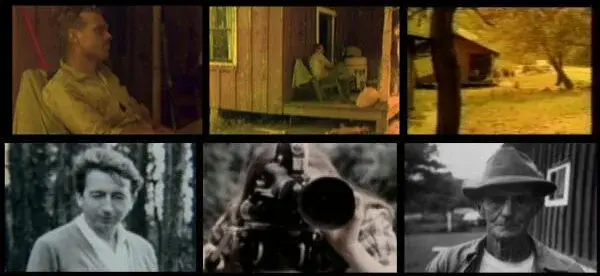
Invariably, the images created by these visitors were negative, reminiscent of the iconic photograph of President Lyndon B. Johnson in Martin County, Kentucky, in 1964, when he went on “tour” to drum up support for the War on Poverty. By the late 1960s many people in Appalachia felt as if they had become the laughing stock of the country and resented this attention. This turned tragic for Hugh O’Connor and his family.
In STRANGER, Elizabeth asked hard questions about the power of images and the responsibilities of those who make and utilize those images. She offered no easy answers. I urge every photographer and filmmaker to watch STRANGER (it is free on YouTube, Vimeo, and PBS). You will argue with it, you will agree with it, and you will never think about photography the same way again. At the time that Liz made STRANGER, I was one of the very few people who studied the War on Poverty and the only historian in the country that studied both the War on Poverty and Appalachia. She asked me to serve as a consultant for the film and after its release we together hosted a number of showings across eastern Kentucky. We stayed in touch for years until she “retired” from Appalshop.
As a historian, a photographer, and as a friend, losing Liz hurts.
Image is perhaps the single most important factor in trying to understand the Appalachian region. In 1899, William Goodell Frost, then President of Berea College, described the people as “contemporary ancestors”—people currently alive but, because of the rugged unforgiving topography that kept then “locked” in the mountains, had lifestyles that resemble the 1700s. Frost’s image of the region and its people has remained essentially constant over the last 125 years. Witness the popularity of J.D. Vance’s 2016 Hillbilly Elegy.
So consistent is this image that many students of the region contend that Appalachia IS this image, that Appalachia really does not exist independent of the image. Ask anyone from anywhere in the United States to describe Appalachia and you will, I bet, get some version of that image. I do not deny that there is a reality there, but it is not the entire picture. I too have taken my share of photographs of that negative image (and have had more than one “STRANGER WITH A CAMERA” moment). I have also captured the environmental damage that results from strip mining and clear cutting. Indeed, to be an Appalachia historian also is to be an environmental historian. This work comes at the request of environmental and social reform groups.
What I try to do when I am free to choose what I photograph, is turn to the positive.
I want to show the beauty of the region and the talents of its people.
What draws you to certain landscapes, scenes, or moments when choosing what to photograph?
While not denying the reality behind many of the negative images of Appalachia, either of its people or the economic and environmental destruction caused by extractive industries, when I embark on a photographic journey, I do seek a positive, affirming, and exciting experience.
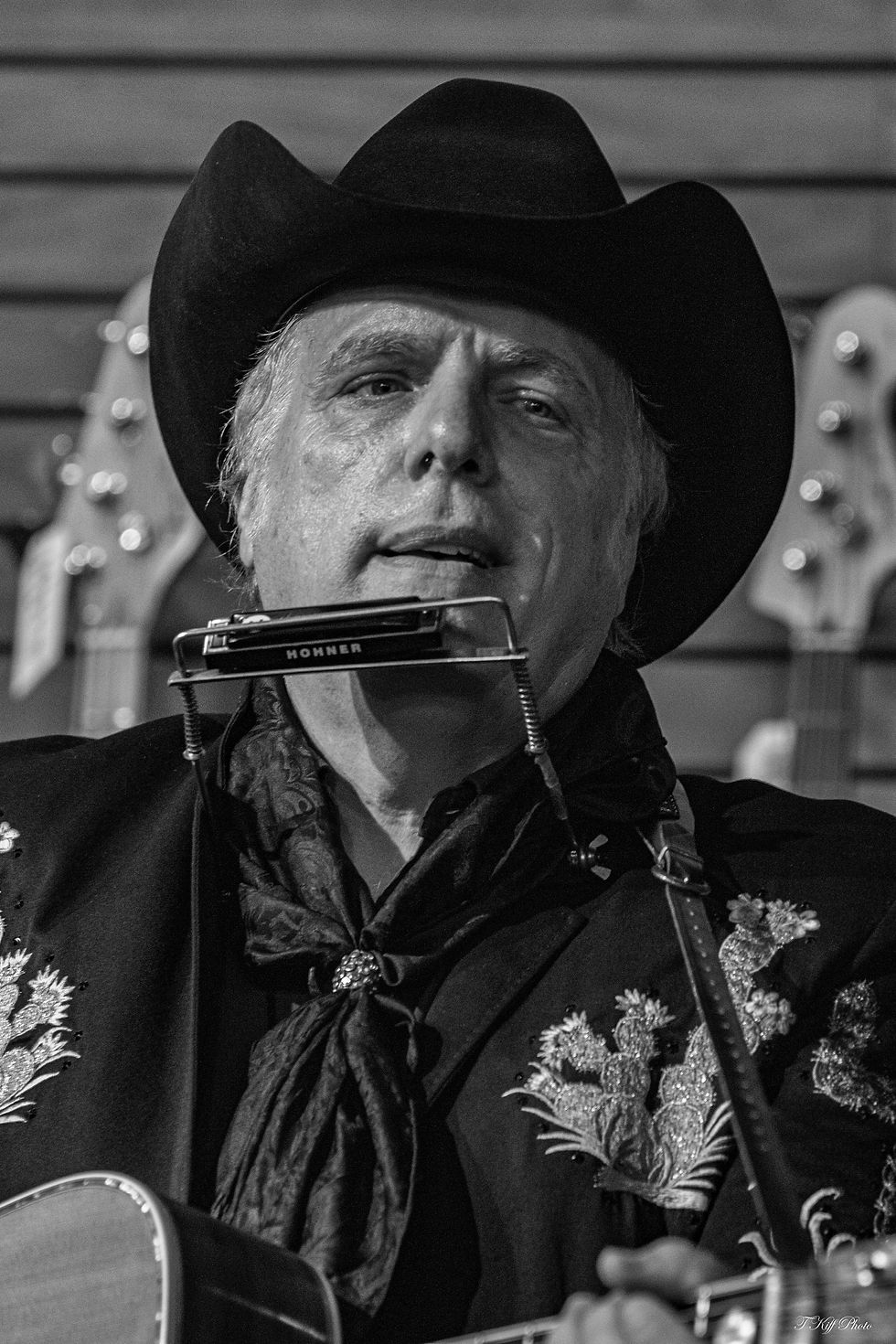
I do not take many photos of people, but I do “follow” and photograph a few local musicians. Doing this keeps me in practice photographing people while providing a challenge. If I do happen to get one right (rarely), it usually gets posted on that musician’s Facebook page, as a publicity photo, or a performance poster. That makes it worth it. I enjoy helping local acts. I am still waiting to attract Tyler Childers’ attention. His fiddle player was a colleague who taught in Morehead State’s Traditional music program.

Contributing to a more complex, yet positive overall image of Appalachia is important to me.
It is landscapes and nature, however, that fuels my excitement. I still have that sense of adventure that led me to build a shanty boat and attempt an Ohio River “cruise” when I was 12. Using a topo map and compass (it does not run out of battery power) or asking a lot of questions to forest rangers, wildlife biologists, and fish and wildlife rangers, I seek out cliff lines in remote places up and down eastern Kentucky and southwest Virginia.
When I get the “nobody has been here in 300 years” feeling, I know that I am in the right place. Many of these places are difficult to access and so I get to bring some true wilderness to people who, for some reason (age, health), would not have the opportunity to see. Still, given the hold of that “Appalachian Image,” a human element—a bridge, a railroad tunnel, a barn, it does not have to be an actual person—can really “make” a photo. Perhaps in no other place is the “human element” so closely tied to the topography.

There are a couple other factors that I consider. Appalachia is a “tight” place. The valleys are narrow and you do not see the broad sweeping landscapes of the plains or the Rockies so I need to think about “intimate landscapes”—a few colorful trees in Autumn, a photo of a small meandering creek bed, for example. Further, Appalachia is one of the most is the biodiverse places on the planet and the number of bugs, trees, animals, make for endless “intimate landscape” possibilities.
One of my most “successful” photos is an “intimate landscape” that focuses on a red eft (a juvenile newt). I had to lie in a creek for some time waiting for the eft to crawl into view, but when he finally became visible, I was basically looking him in the eye. Norton, Virginia’s Tourism director liked the photo so much that she named their local fund raiser event the “Red Eft 5.5 Miler.” (See the High Knob Destination Center Facebook page)

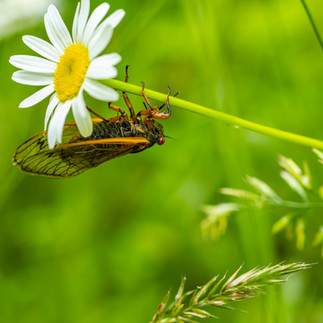
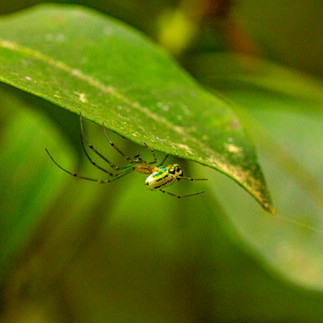
Over the last couple years, I have spent more and more time on “Intimate Landscapes” of wild flowers, bugs, reptiles, and most of my time behind the lens is also a lot of time lying in the dirt so I can get a direct eye-level photograph.





You’ve chosen to share and sell your work primarily through word of mouth and personal connection. Why has that approach felt right for you?
I want to echo what my good friend, Estill County, Kentucky native and also a documentary film maker, Steve Middleton jokingly says when he gets a question like this: “it’s just the hillbilly in me.” More seriously, when people ask me where I am from, I always say Cincinnati (I did grow up watching the Big Red Machine). That is just to make things easy.
I am really from a more rural, small town place about 25 miles west of the “big town.” Further, I have spent most of my life in small places like Morehead, Kentucky and Big Stone Gap, Virginia so I am comfortable in small towns where everyone knows each other. I try to make photos of places and things that people whom I know like to see.

For example, one night, after I learned that my friend Jake, who worked at the local brewery, got his Masters degree from the University of Wyoming, and spent a lot of time in the Snowy Range, just to the west of Laramie. I spend a lot of time in the Snowy Range too, so I told him that was going to get a print of the “Snowies” and hang it across from the bar, if the owner would allow it, so he could see the mountains every time he was there.
I had no idea that the owner was right behind me when I said that, but I heard a voice over my shoulder that declared “that would be great.” That same night, I ordered a 20”x40” acrylic print of my favorite Snowy Range photo. I want to say that the owner was just being kind to me when he agreed to allow me to hang the photo in the bar, but finally, when I took it down there and unwrapped it, he had one of the moments that you can’t fake. His eyes widened and he gave a little “start,” and then said “what else ya got?”

That acrylic finished just popped! Clearly, he did not anticipate how impressive that finish is! Now I have five more photos there and this past Fall, I ordered another five—one more of the Snowy Range and four from Appalachia. I get constant attention there, I rotate photos when needed, and my business address is the third barstool on the right. Beat that!!
Of course I am not there every day, but everybody knows how to find me.
Born in southwest Ohio, I grew up exploring the woods and water that surrounded the confluence of the Great Miami and Ohio rivers. My childhood experiences in this environment developed into a passion for the outdoors—a passion that continues to grow. Coupled with my love for the natural world, is a love of the arts, especially music and literature, as well as a vivid, active imagination.
Captivated by the “Legend of Mike Fink,” a rough and tumble keelboatman, described as half alligator and half wild horse, who traveled the Ohio and Mississippi rivers in the late 18th century, and Mark Twain’s Huck Finn, a young Tom once built his own “boat” and tried to recreate his life as an 18th century boatman. Luckily, the police “arrested” and placed him in the custody of his parents before he got too far downstream.
Despite this setback, my love of the music, legends, and environment of the Ohio River Valley continued unabated, and this eventually led me to the University of Kentucky where I earned a Ph.D. in history in 1998. My focus was modern American and Appalachian history. That same year I joined the faculty at Morehead State University, Morehead, Kentucky, and spent nearly thirty years as a history professor. In addition to my award-winning book on the War on Poverty in Appalachia, I, in the years before PowerPoint, turned to photography as a way to help students imagine a time and place that was different from their own. In 2024, I left academics to focus on photography full time, but it is yet another way to teach about the history and environment of Appalachia and Ohio River Valley.
My work has appeared in local business in Morehead, Kentucky, the Radford University (Radford, Virginia) Art Museum, and in many of the tourism information brochures published by the City of Norton, Virginia and its High Knob Destination Center, both in print and online. I also teach photography to very small groups in Rowan County, Kentucky.
The story of the red eft photo is comparable. I entered it in a “wildlife” photo contest sponsored by the city of Norton, Virginia a few years ago and it won. (My photo of a garter snake was much better but nobody likes snakes!) Now that photo hangs in the city’s High Knob Destination Center, it is printed, along with three others (including a full two-page spread and another single full-page), in the High Knob Adventure Guide, and it’s the face of their funding raiser—The Red Eft 5.5 Miler.
Also, the herpetologist at the University of Virginia’s College at Wise uses that photo in his conference presentations and classes. He told me that the number one question that he gets following a presentation is “where did you get that red eft photo?” (Again the “secret” to that photo is the fact that I was lying in the creek when it crawled out and when I pushed the shutter button, I was looking at it right in the eyes. Perspective can make the photo!)
So…I guess that was a long way to say that the small town, personal, word-of-mouth approach can work!
That being said, I am in the process of establishing tkiffphoto.com and I should be joining the online community before too long.
Last, an unanticipated result of this local exposure is that I am now getting requests to teach people photography, so this is another avenue into which I am moving.

Do you see photography as a form of preservation, similar to the historical work you’ve done throughout your career?
Absolutely. In fact, in many cases preservation is the point!
Over the years I have participated in events called “History Harvests.” Usually run through a college or university history department, these “Harvests” encourage people to bring their antiques or family heirlooms—items that they want to keep and not donate to a museum—to have them photographed. While many of the artifacts that I photograph are “ordinary,” at every event, somebody brought in an item that I had never seen before.
Through these efforts, people get to keep their family treasures while the historical record becomes more complete. While we, the professional historians, “harvest,” we also plant. We sow the seeds of historical consciousness in people who may never have thought that they could contribute something significant to the historical record and that their family story is a part of the national story.

In other cases, I try to preserve architectural styles by visiting and photographing older sections of cities. On the other side of that question, every photograph captures a moment in time and thus is itself a historic document. Think about how parents make photos of their children on their birthdays or family during holiday celebrations. They are documenting change over time.
This holds for landscapes, which can reveal different land use pattens. This is what I do when I photograph clear cuts or mountaintop removal mine sites. All of us are creating historical documents that illustrate natural time and human time.
History is not about memorizing names and dates.
When my students would complain to me that they think history is boring, I would answer them with “all you have ever done is try to memorize names and dates, right? That stops now!” History is the study of change over time and trying to understand what those changes mean and how it affects our lives now.
Welcome to the profession, colleagues!

What advice would you give to new and aspiring artists?
I’m basically self-taught. Working in a university setting for three decades, however, provided me the opportunity to learn from a significant number of very creative, accomplished people. I was in close contact with photojournalists (my first published photograph was in a local newspaper), filmmakers (especially Liz Barret), and fine art photographers, so using the term “self-taught” probably isn’t as accurate as I think it is.
Of the many things I learned from these wonderful people, I would like to pass on a few ideas to those who wish to embark on this amazing, artistic journey. I am going to divide this into a few broad categories:
Technical: Learn your camera, learn exposure (the Exposure Triangle) and how to work with light. With digital cameras, photographers can see the results of their work virtually instantaneously and, with a high-capacity memory card can make hundreds of exposures. If you go at it haphazardly, eventually you will get a decent photo.
Unfortunately, if you spend all morning making haphazard adjustments on the camera, you will lose that light about which you should also know. Learn how to take a good photo on the first exposure. There have been a few occasions over the years when I have “nailed it” on the first shot—when I view the photo on the computer screen for the first time and say, “that’s it!” That doesn’t happen often, but I do get a good exposure on my first attempt. My spouse, Jinny, also a history professor, was an art and design major in college and she knows color and composition better than I ever will and she also knows when I have used the editing software a little too much. She keeps me honest and I can’t get away with (I mean that she will not let me get away with) letting software fix my mistakes.
Habits: Practice and then practice, study, and seek advice from artists better than you. I have a camera with me everywhere I go and I photograph something every day. The history profession is built upon reading and writing. The more we read, the more we learn what good writing is and the more we write, the more we apply what we learned from reading, and the better we then write ourselves. Apply what you learned about your camera and lighting by practicing and practicing. Study by attending art museums with photography exhibits—or any exhibits for that matter. Portrait artists have been using “Rembrandt Lighting” for almost 400 years. I read everything I could find about photography.
One of my favorite (non history) books is Joe Sartore’s The Photo Ark: One Man’s Quest to Document the World’s Animals. I read the Artbeat “Behind the Print” blogs (I really enjoyed Tony Hebert’s blog.) Last, I sought advice. Again, drawing on my academic background, after we write, we ask our peers to read and critique what we have composed. Good colleagues will always help you and if they see some error, (and they will because you are not perfect) they will bring it to your attention in a kind and helpful way. Again, I was lucky to work in a university setting where this kind of help was across the street. I agree with what Tony Hebert stated in his blog about not just throwing your work on social media. Seek out quality advice.
Attitude: Stay positive. There is a reason that we as a society have so many adages—walk before you can run, Rome wasn’t built in a day, He that can have patience, can have what he will (Ben Franklin)—that encourage us to take the time necessary to develop our skills. You will need the time to learn your camera, to practice, and to get that advice. Then, one day you will believe that you have done enough to enter a photo into a contest. Chances are, you will end up in the “honorable mention” category. We all end up in that category with our first submissions.
I have NEVER had a book or article manuscript accepted for publication with the first submission. In fact, when historians get the letter listing all the things wrong with their manuscripts but closes with the invitation to “revise and resubmit,” they pop the champaign cork because that’s the sign that they are on the right track. With more work, the next step is publication. So, you, the photographer, study and practice more because with the additional work, you get that much closer to an exhibition. If you really want to attain any level of success as an artist, you are willing to put in the work to do your best because when you hang on of your photos in a public place, that also a part of you on that wall—your vision, your efforts, your heart. It takes some real guts to place yourself, through your art, on that wall because it exposes you to all who see it. But it feels so good, especially when you have earned it.
As someone who works with historic landscapes, what printing products or finishes help to bring your vision to life and why?
Hopefully, I will be able to answer this question quickly (unlikely!!) I think that I have prints in every category that Artbeat offers—paper, canvas, metal, and acrylic. I have the paper prints in a couple of portfolios that I keep close at hand so I can show potential customers a variety of images.
Jinny loves “fungus” intimate landscapes (lucky for me she loves old decaying things!) printed on canvas, and I, for a while, vacillated between metal and acrylic. When I took that “Snowy Range acrylic with metallic paper” print to the brewery, the “jury’s” vote was decisive. Everyone said “it looks 3-D!” I agreed. That consensus has never changed no matter which photos are down there.

Now, the acrylic-metallic paper finish is my default finish. I am hoping to get up to Cincinnati this Spring to photograph some of the old historic neighborhoods there. I think that the acrylic-metallic paper “3-D” finish would be great for cityscapes too.
What led you to partner with Artbeat Studios for your fine art printing needs?
I assume that we have all “shopped around” when we first started printing our photos. What first captivated my attention with Artbeat, however, was the number options that Artbeat offered—acrylic, metal, canvas, paper.
Over the years, I have had photos printed in every one of these finishes. Still, options are not finished products. Nevertheless, when I saw those finished products, be they paper, acrylic, metal, or canvas, I was absolutely floored. The print quality was unbelievable. The colors were amazingly accurate and mirrored what was on my computer screen and what I envisioned in my mind.
Now, Jinny has her “Wall of Fungus,” intimate landscapes composed of canvas prints, in the kitchen, the brewery has 6 acrylic prints, and I have at least one of each—metal canvas, acrylic, and paper—in the house. Still it is the acrylic finishes that knock me out!
Further, and maybe most important, is customer service.
I have taken a lot of time away from Charles Wallace, particularly with one photo of a fog-enveloped tree on an early morning in Cades Cove, Smoky Mountains National Park. I think that we have worked on seven or eight versions of that one picture. I just haven’t gotten it right yet, but with his help and advice, I keep getting closer.
Just as important, however, are the people who labor to make sure that your photographs arrive safely, unblemished, and ready to deliver to your clients. I know that when I get a photo from Artbeat, over 2200 miles away from my little town of Morehead, Kentucky, I know that it is going to be perfect.

My final salute, then, is to them! Thank you for making sure that my vision arrives safely and securely.
Y’all are the best!


Comments